How many vehicles can pass a one-lane highway work zone at 80 km/h?
Researchers estimated a nominal capacity of 1,739 vehicles per hour in the affected direction at one work zone in North Rhine-Westphalia, Germany.1
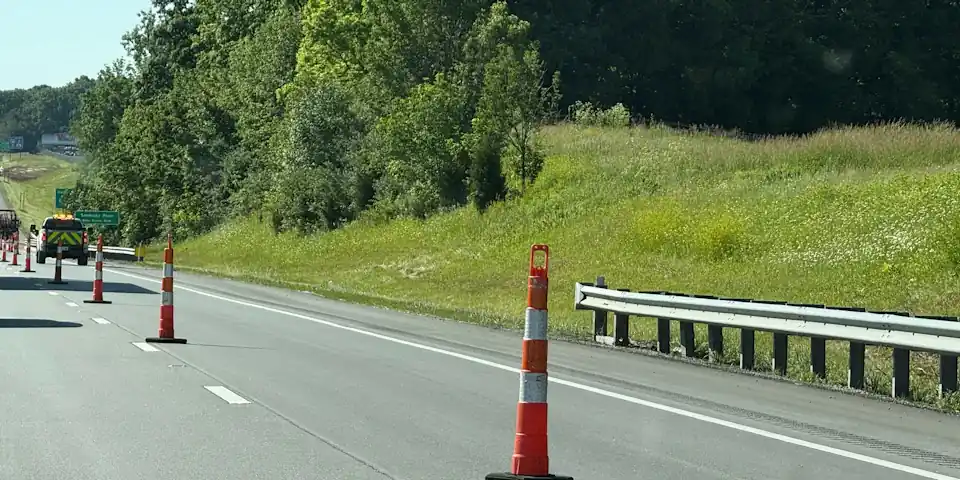
What the researchers measured at the work zone
At site NW 2012_805, one 3.75-metre lane remained open in the measured direction. The road had a 3% uphill gradient and 7.5% of the traffic was heavy vehicles. The report used the 99th percentile of observed hourly traffic counts as the nominal capacity for this site.1
How much traffic can the simulated bridge carry?
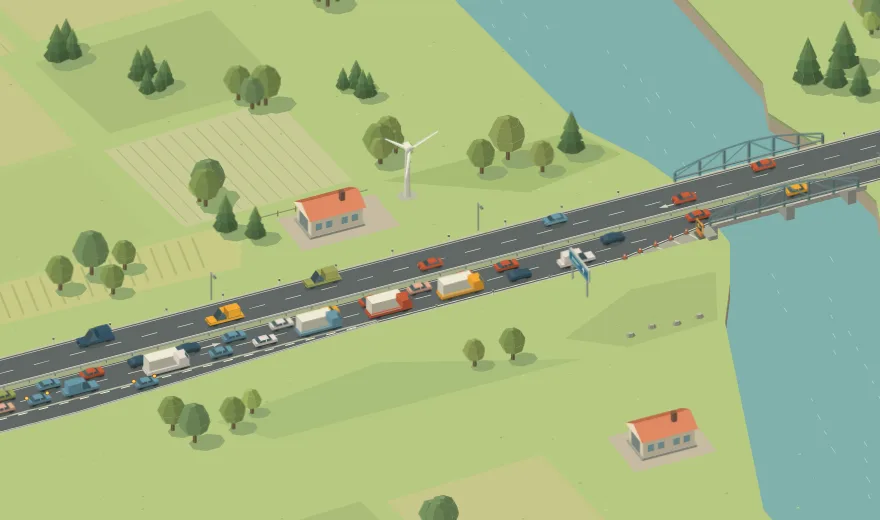
Two approach lanes merge into one bridge lane on the level simulated road. The desired speed is 80 km/h and trucks make up 12% of requested vehicles. The median across three hour-long runs is around 5% above the nominal capacity at the measured site.2
What the figure means for a queue
Dividing 3,600 seconds by 1,739 vehicles gives a little over two seconds between passages. That is an average, not a gap that individual drivers should aim for.
If 1,900 vehicles arrive in an hour and 1,739 are served, 161 trips remain outstanding. A short burst of arrivals can create a long queue well before the hour ends; evenly spread arrivals look different. Whether the figure applies to another work zone depends on gradient, lane width, vehicle mix and demand.1
Try it yourself
Open the one-lane bottleneck with a desired speed of 80 km/h. Press Start and watch the count at the end of the bridge and the queue at the merge.