
Why can traffic flow steadily through a bottleneck and slow down farther back?
Vehicles can leave a queue at a relatively steady rate while waves travel back through the queue. Detectors on the UK’s M4 recorded these waves in the queue and a steady flow beyond the lane drop.1
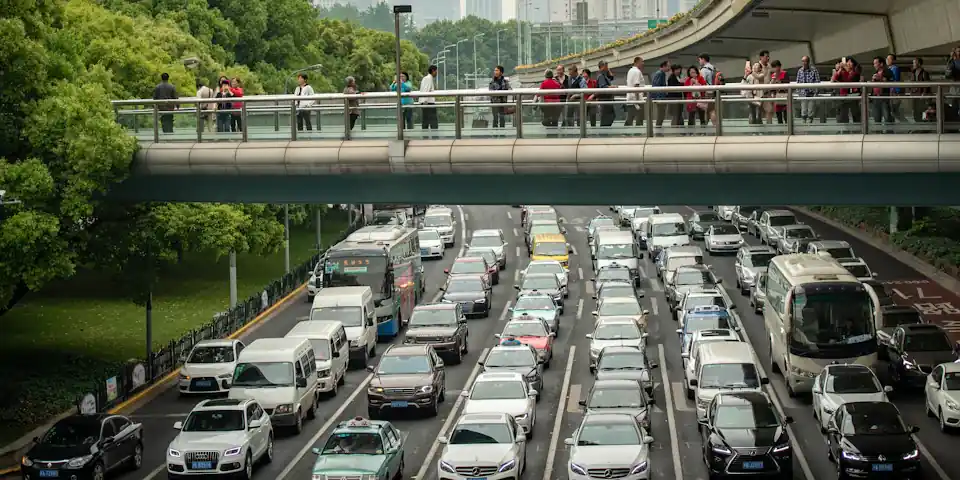
How a traffic wave travels
As successive vehicles brake and speed up in turn, the change in speed travels against the direction of traffic. A detector farther back picks it up later. On the M4, Bertini and Leal distinguished these waves in an existing queue from the slower movement of the back of the queue as it first formed. Beyond the bottleneck, the number of vehicles passing per unit of time remained relatively steady.1
| Observation | Travel speed |
|---|---|
| Back of the queue as it formed | 4.8 to 6.4 km/h |
| Flow fluctuations within the established queue | 17.6 to 19.2 km/h |
Measurements on the A5 near Frankfurt
During a suspected temporary lane closure on 6 August 1998, traffic remained relatively steady through much of the queue. Farther upstream the flow varied more strongly. Small waves appeared near the back of the queue. The researchers observed no large stop-and-go waves in this case. The measurements summarize traffic by minute and detector location.2
Test it in the simulator
Build a queue with high demand and watch the flow beyond the bridge.