
Do I benefit from buses and trains even when I drive?
On days when buses and trains stopped running, car journeys in five German cities took 3.8 to 4.3% longer, averaged over the day. A half-hour trip became just over a minute longer.1
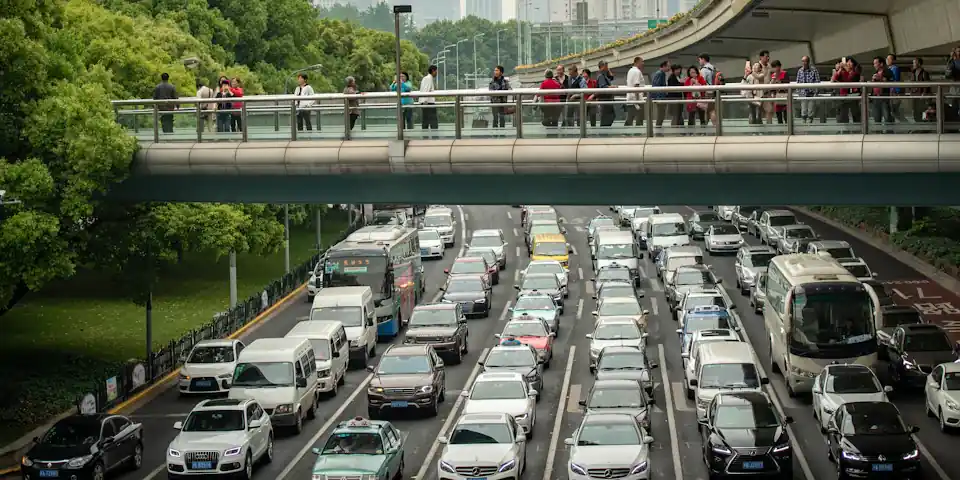
How the strike showed up on the road
Researchers compared traffic in Berlin, Hamburg, Munich, Cologne and Frankfurt am Main, in cities with and without strikes, before, during and after the disruptions. The travel time data came from TomTom GPS speed measurements for 2010 and 2011. The range from 3.8 to 4.3% comes from different statistical estimates of the daily figures.1
On strike mornings, counters on motorways and federal roads also recorded more cars. People who drove anyway shared the road with extra vehicles.1
How much longer the morning commute took
Between 8 and 9 in the morning, the authors estimated driving took 8.4% longer. That estimate was less precise than the daily figure. The comparison shows what a short-term cut in transit service does to the roads. It says nothing about a permanent new bus line.1
Test it in the simulator
Open the bus lane to cars and watch traffic without buses.