
What changed when Dutch motorways switched to 100 km/h by day?
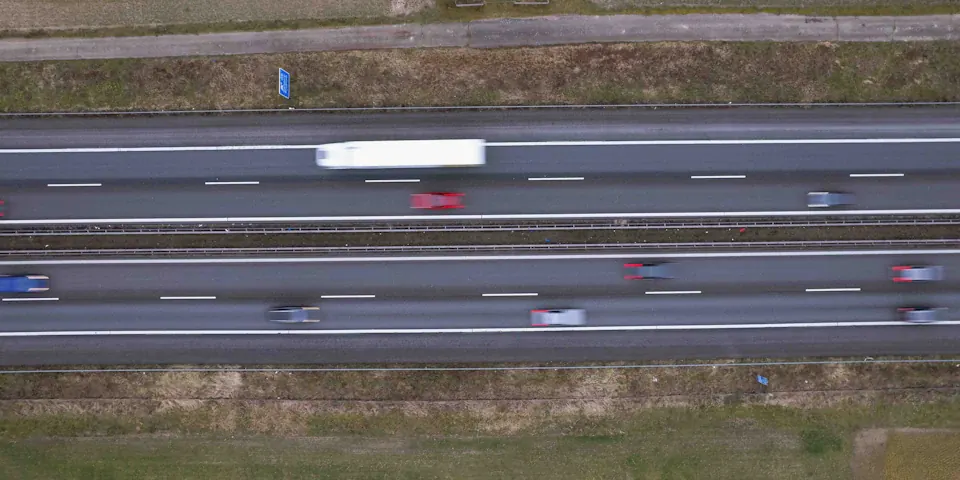
On Dutch motorway sections that previously had a 130 km/h limit around the clock, average daytime car speeds fell from 115.2 to 104.3 km/h in the first year. Rijkswaterstaat analysed 62 monitoring sites.1
Why the limit can change at 7 p.m.
On 16 March 2020, the Netherlands introduced a 100 km/h limit from 6 a.m. to 7 p.m. to reduce nitrogen deposition in natural areas. The daytime limit applies to almost all motorways, with 80 or 130 km/h on some sections. From 7 p.m. to 6 a.m., signs specify 100, 120 or 130 km/h, depending on the road.123
The change coincided with the first COVID-19 restrictions. Rijkswaterstaat also estimated how fast cars would have travelled at comparable levels of traffic demand. The adjusted estimate after the change was 101.8 km/h.1
How this compares with 130 km/h in Germany
On German motorway sections without a binding limit, 130 km/h is the advisory speed for cars. The German Environment Agency modelled binding limits that would apply around the clock. It estimated annual savings of 1.9 million tonnes of CO₂ equivalent at 130 km/h and about 5.4 million tonnes at 100 km/h. The estimates cover cars and light commercial vehicles on German motorways and use data for 2018.45
Try it yourself
Compare desired speeds of 100 and 130 km/h on three lanes. Watch how throughput and the queue change in the simulator.
Sources
- Rijkswaterstaat (2021) · Motorway speed monitor 2020-2021, slides 4-6 (Dutch) ↩↩2↩3
- Rijksoverheid (2025) · Nitrogen deposition after the daytime speed limit reduction (Dutch) ↩
- Rijksoverheid · Speed limits for cars on Dutch motorways (Dutch) ↩
- German motorway advisory speed regulation · Section 1 (German) ↩
- Lange, Hendzlik and Schmied (2020) · German Environment Agency, modelled speed limit scenarios (German) ↩